Don’t just correct. Invite.
What makes feedback transformative and how to make sure it lives beyond one excellent teacher

Dear readers,
David Didau’s post about feedback has been making the rounds.
Everyone should read it. It’s that important.
It’s called The Feedback Continuum: why reducing feedback helps students learn, and it does something I rarely see in the discourse around feedback: it argues that reducing feedback can actually strengthen learning.
The argument, briefly: feedback is too effective at the wrong things. It polishes performance. It smooths over errors. But unless it’s deliberately designed to fade, to hand control back to the learner , it can work against the very independence we’re trying to build.
He says:
“The real purpose of feedback isn’t polished performance. It’s helping learners detect and correct errors for themselves.”
I’ve been sitting with this idea because it maps directly onto something I have been thinking and taking action on for 30 years in the schools and districts I partner with: transformative feedback is one of the 10 Essentials I teach — and it’s also one of the most misunderstood.
Here’s what I’ve come to believe about what makes feedback transformative rather than just corrective:
The gradual qualities of transformative feedback
It begins with noticing, not fixing. The most powerful feedback moves start with a question, not a correction. “What do you notice when you reread that paragraph?” invites a student into their own thinking before you offer anything.
It names a strategy — then pulls the student into doing it rather than simply correcting.
Transformative feedback doesn’t just identify a move and move on or correct errors. It models, but the real goal is to get the student inside the experience of trying it themselves — so they know what it feels like, not just what it looks like.
A student who has felt a strategy in their hands will reach for it again. A student who only watched you do it may not.
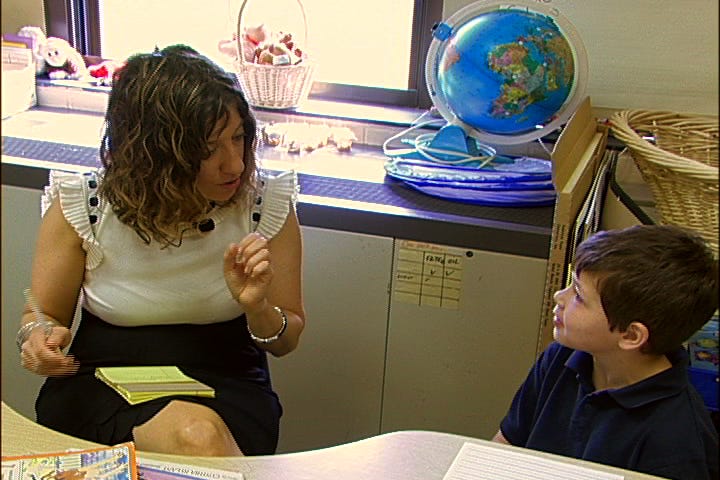
Think about a young writer who writes can when they mean cat. The corrective response is to fix the letter. The transformative response is something closer to: gesturing under the n and saying, “If this were cat, this wouldn’t be here — say the word what sound do you hear at the end?” That nudge pushes the child back into the word. They do the work. You’ve built the muscle, not just corrected the error.
It deliberately fades. The arc of transformative feedback runs from “let me show you” → “let’s try together” → “you try, I’ll watch” → “you notice, you fix.” If the feedback loop never reaches that last stage, independence hasn’t been built — just performance.
Robert Bjork’s research on practice offers a useful parallel here: when we over-support learners, their in-the-moment work can look strong while their actual independence remains undeveloped.
The same trap exists in feedback. A student whose teacher catches every error before they do has been helped — but not taught.
It trusts the student’s own language. Some of the most powerful feedback moments I’ve witnessed happened when an educator said very little — and purposely not haphazardly let a student discover, in their own words, what they already knew. That discovery sticks in a way that our expert knowledge never quite does.
Letting research guide you without letting it restrict you
The research on feedback is genuinely useful. We know that specificity matters. We know that timing matters. We know that feedback aimed at the task outperforms feedback aimed at the person.
But research describes patterns, not prescriptions. It tells you what tends to work across many students — it cannot tell you what this student needs in this moment. That gap is where educator judgment lives, and it’s irreplaceable.
The move I try to teach is: use research to build your repertoire, then use your observation of the student in front of you to choose from it. Research gives you the ingredients. Judgment tells you what and when to cook.
Making it school-wide, not just one teacher’s superpower
Here’s the problem I see most often: a school has one or two teachers who give transformative feedback. Their students grow. The rest of the school watches, somewhat awed, and calls it a gift.
It isn’t a gift. It’s a set of moves that can be named, practiced, and built into the culture of a school — if the conditions are right.
That means baking feedback language into curriculum design, not just PD sessions. It means teachers having shared language for what they’re noticing in student work — so a coach and a classroom teacher can have a real conversation about the same piece of writing. It means leaders asking in instructional rounds not just “what did you teach?” but “what did the student do as a result?”
When feedback is a school-wide practice rather than a personal style, something shifts. Students start to expect to be asked what they notice. They start to bring their drafts to each other with real questions. The culture of reflection becomes generative — and it belongs to everyone, not just the teacher in room 12.
A note on the 10 Essentials Writing Cohort this summer: I’ve been humbled by the response to the July cohort. A whole school recently signed up as a team — which tells me something: when educators find PD that matches how they actually think about learning, they go all in together. We are close to capacity. If you’ve been thinking about joining, or sending a small team, now is the time.
The cohort runs July 8, 9, 15, 22, and 23 on Zoom — five live sessions where we dig into all 10 essentials together, including a deep session on transformative feedback. You can learn more, download the syllabus, and watch a free taster webinar here.
The piece I linked above is worth your time. And I’d love to hear: how are you thinking about feedback in your classroom or school right now? Please feel free to reply to this email.
Warmly,
Leah
If my thinking resonates with you, I’d love to help you customize it for your school or district.
📌 Need tools for ELA instruction? My Literacy Toolkit has templates and planning guides and curated videos designed for coaches and teachers.

📌 My mentor text bundles include clear mentor texts with a key that explains each sentence.

📌Check out my most recent book, “We-Do” Writing for a research aligned framework for how to support writing instruction and curriculum.
📌My book Self-Directed Writers will ensure that all of your students are engaged, self-directed and motivated writers.
📌My book Don’t Forget to Share shows you how to leverage conversation to improve writing.
📌Check out my article 6 Qualities for a Strong Writing Curriculum
📌 Join me on Pinterest