

Making Literacy Stick
5 Keys to Transfer in Word Study


If this post resonates, please tap the heart and share it. The best way to support my work — and help me keep creating resources for teachers and schools — is through a monthly, annual or licensing subscription.
For over 30 years, I’ve been partnering with schools, reading the research, and thinking deeply about what truly matters in literacy instruction.
The question that guides all of my work is this:
How do we ensure that what we teach students, especially in word study, actually transfers to their ongoing reading and writing?
Transfer isn’t just about accuracy or fluency.
It’s about students ultimately being able to take what they learn and adapt it to novel literacy situations.
That’s the end game: powerful, skillful, and adaptable reading and writing.
📌Here is a fun video that sums up true transfer
📌Haring and Eaton's Instructional Hierarchy is a great read to understand the different and deeper ways we can know something.
📌Read my Substack Article about why knowing something is not enough.
I presented this work at the New Jersey Education Association (NJEA) Convention.
This convention is one of largest gathering of K–12 educators in the world, attracting over 20,000 teachers and educational support professionals from across the state.
It features more than 300 professional development seminars, workshops, and programs designed to help educators enhance their skills and stay current in their fields
Sharing my workshop at such a respected and widely attended event reflects the careful thought, research, and practical strategies that underpin this series.
My goal always is to offer educators actionable insights that truly help students transfer what they learn in word study to reading, writing, and beyond.
If you attended that workshop, this free article is a summary of what we talked about. It includes all follow up links that we discussed.
Due to popular demand, I’m also offering a more detailed examination of the workshop content in a six-part Substack paid tier series.
It’s the same carefully researched strategies, routines, and links from the workshop, now accessible to anyone who wants to deepen their impact on student learning.
This is a chance to engage with research-backed literacy instruction beyond a single event and bring it directly into your classroom or school, all at a very accessible price for monthly, annual and licensing subscribers.
Not only will you get access to this six part Substack series, but you also will get access to all of my exclusive content and a growing archive of almost 80 articles.
Each part of this series is anchored in research and practice.
Below is a quick overview of the article series and of the five ways to make sure what you teach in word study sticks and students are able to adapt it for any situation.
📌 Here is one of my favorite books on teaching to transfer.
📌Want a free downloadable to get you started?
1. Get It Right From the Start
Word study has to be taught systematically and thoroughly right from the beginning.
If we want students to transfer that knowledge to their ongoing reading and writing, we first have to teach it correctly.
Missing elements early on make it harder for students to generalize it later.
Article 2 dives into exactly what a strong word study program looks like and how to get it right from the start.
I include a checklist that you can use to assess what is already working in your word study instruction and what can be improved upon.
📌 An important part of word study is facilitating the orthographic mapping process. Watch this quick video where I explain the process in 60 seconds (Orthographic mapping explained in 60 seconds )
📌 Research on Orthographic Mapping
2. Make It Routine
Students need routines that immediately put word study into action by reading and writing words/sentences while they are learning it.
These routines bridge teaching and practice so learning doesn’t stay on the page or the knowing phase. It becomes usable and purposeful.
Article 3 shares practical routines, including word building, that you can integrate immediately into your ongoing instruction in your classroom or school.
📌Read more about one integrated routine here
3. Anchor in Research
For students to apply what they learn, districts need to leverage resources and create district curricula that have been intentionally designed with many opportunities for spacing and interleaved practice.
It’s not enough to practice in isolated blocks and then move on to the next topic; we must ensure students are practicing over time and well structured curriculum can help with that process.
That’s what I write about in article 4. I include examples so that you can imagine how it could work in school or district setting.
4. Practice with Purpose
Not all practice is equal.
We must design practice that promotes generalization and adaptation.
Then, we must guide our students meticulously through that practice, which means anticipating common errors, correcting proactively, and monitoring outcomes carefully.
When practice is purposeful and precise, students begin to truly internalize and transfer what they’ve learned.
I take on this topic in article 5, sharing examples of purposeful practice along with how teachers have guided that practice to make sure that students are actually practicing what it is you want them to learn.
📌Read more about deliberate practice here.
📌Correct Answers But Not Learning is a great read about how not all practice is equal.
5. Say It Clearly
Teacher clarity matters. Students learn best when instruction is simple, direct, and unambiguous. Clear teaching allows the learning itself to take center stage. That’s what I take on in article 6.
📌Here is some interesting reading on Teacher Clarity
The Takeaway
Here’s a quick recap of the five keys:
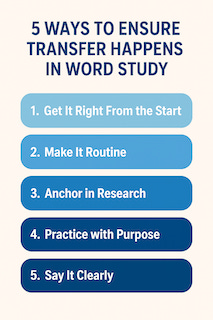
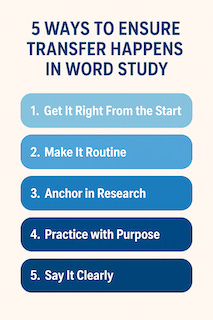
This 6 part series, part of my paid tier, goes deeper into each of these elements, exploring research anchors, actionable strategies, and routines you can bring directly into your classroom, your district or your school.
Each article will include checklists and questions so that you can leverage what you are learning to accelerate literacy progress for the students in your care.
Whether you are a teacher, a literacy coach, a principal, district leader or a literacy consultant, this series is for you.
If you’ve ever wanted a roadmap to ensure that students don’t just learn, but actually use what they learn, this series is for you.
And the best part?
It’s practical, actionable, and affordable offering the same content and links as my NJEA workshop.
Sign up for the paid tier today and give yourself the gift of this five-part series, your students’ literacy growth will thank you.
📌Get full slidedeck from the workshop here.
Sharing is welcome! Please feel free to share the link so others can read, but please don’t print, photocopy, or redistribute without permission
If my thinking resonates with you, I’d love to help you customize it for your school or district.
📌 Need tools for ELA instruction? My Literacy Toolkit has templates and planning guides and curated videos designed for coaches and teachers.

📌 My mentor text bundles include clear mentor texts with a key that explains each sentence.

📌 Want direct support? I offer coaching sessions to help teams develop strong, sustainable coaching models.
📌Want me to work directly with your school or district? Sign up for a discovery call.
📌 Check out my self-paced learning resources for educators for video workshops, slide decks and follow up materials.
📌Want me to work directly with your school or district? Sign up for a discovery call.
📌Make sure to visit my website.
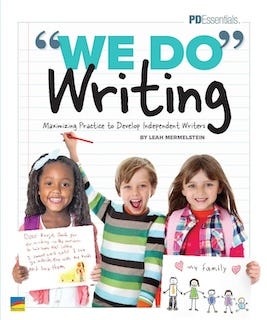
📌Check out my most recent book, "We-Do" Writing for a research aligned framework for how to support writing instruction and curriculum.
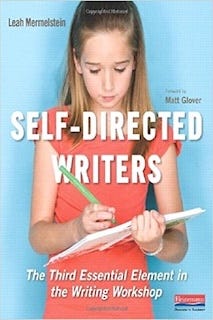
📌My book Self-Directed Writers will ensure that all of your students are engaged, self-directed and motivated writers.
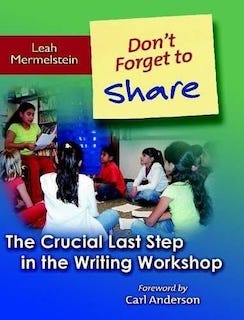
📌My book Don't Forget to Share shows you how to leverage conversation to improve writing.
📌Check out my article 6 Qualities for a Strong Writing Curriculum
(This post may contain affiliate links.)
Hi everyone who was in my presentation on this topic today. I'm so sorry about the google doc confusion. Here is a link to the google doc https://docs.google.com/document/d/1fzGJEmyYhgLdKA8npZ1zqykKhpa4LoxgBVMVOLViapc/edit?tab=t.0